This article was first published by Julian Barlow on LinkedIn on 27th April 2026…
As the Government struggles to de-couple the UK from being held hostage by global gas prices, the global energy system itself is changing at speed.
New analysis from energy experts Ember shows that in 2025, solar and wind power grew so rapidly that they met all global growth in electricity demand, preventing any increase in fossil fuel generation. Solar alone delivered 75% of that growth. For the first time, renewables collectively overtook coal worldwide.
But while the global picture is encouraging, the real opportunity, and the real urgency, lies much closer to home. If Wiltshire is to cut carbon, cut bills and strengthen community resilience, then the power generated here must increasingly serve the people who live here.
The case for local power for local benefit
Across Wiltshire, thousands of homes already have solar panels. Many generate more electricity than they can use, yet most of that surplus is exported into the national grid at low value, disappearing into a system that gives little back to the communities producing it.
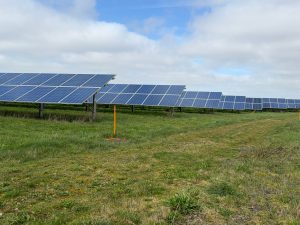
Instead, we need a model that allows streets to export their excess power into a local energy pool which keeps value circulating within that community. We need electric vehicles with integrated solar generation to export when parked – turning driveways into micro-power stations. And we need local solar parks, like the ones we operate at Wiltshire Wildlife Community Energy to be able to supply discounted electricity directly to the communities that host them.
In actual fact, the technology to do all this already exists and the economics are proven. The only missing piece now is the regulatory and infrastructure framework that would allow locally produced energy to stay local.
What WWCE shows is possible
At WWCE, we already demonstrate what community‑owned renewables can achieve. We deliver solid returns to our investors, but our purpose goes far beyond financial performance. Every project we deliver seeks to:
- Support nature, through habitat creation and biodiversity improvements wherever possible.
- Reduce carbon, helping Wiltshire play its part in the national transition.
- Fund community projects, from education to wellbeing to environmental restoration.
In short, we help communities become more self‑funding, more resilient and more sustainable, but imagine the next step… If the clean, low‑cost electricity we generate could be supplied directly to the people who live near our sites, we could deliver a brilliant fourth benefit – lower household energy bills. Our rooftop schemes already contribute to powering the buildings they occupy, but it would be wonderful if solar farms could work in the same way.
A Wiltshire model for the future
The global trend is clear in that solar is now the cheapest form of electricity in most of the world, and battery storage is unlocking round‑the‑clock clean power. As Lord Adair Turner has noted, this is an “unstoppable revolution driven by fundamentally superior technologies”.
Wiltshire could be at the forefront of this revolution – not just hosting renewable infrastructure, but owning it, benefiting from it, and using it to power our homes, schools, businesses and transport.
Local renewables powering local communities. Lower bills. Lower carbon. More nature. More resilience. This is the future WWCE is working towards and it is within reach!